c@rm3nre / August 19, 2026
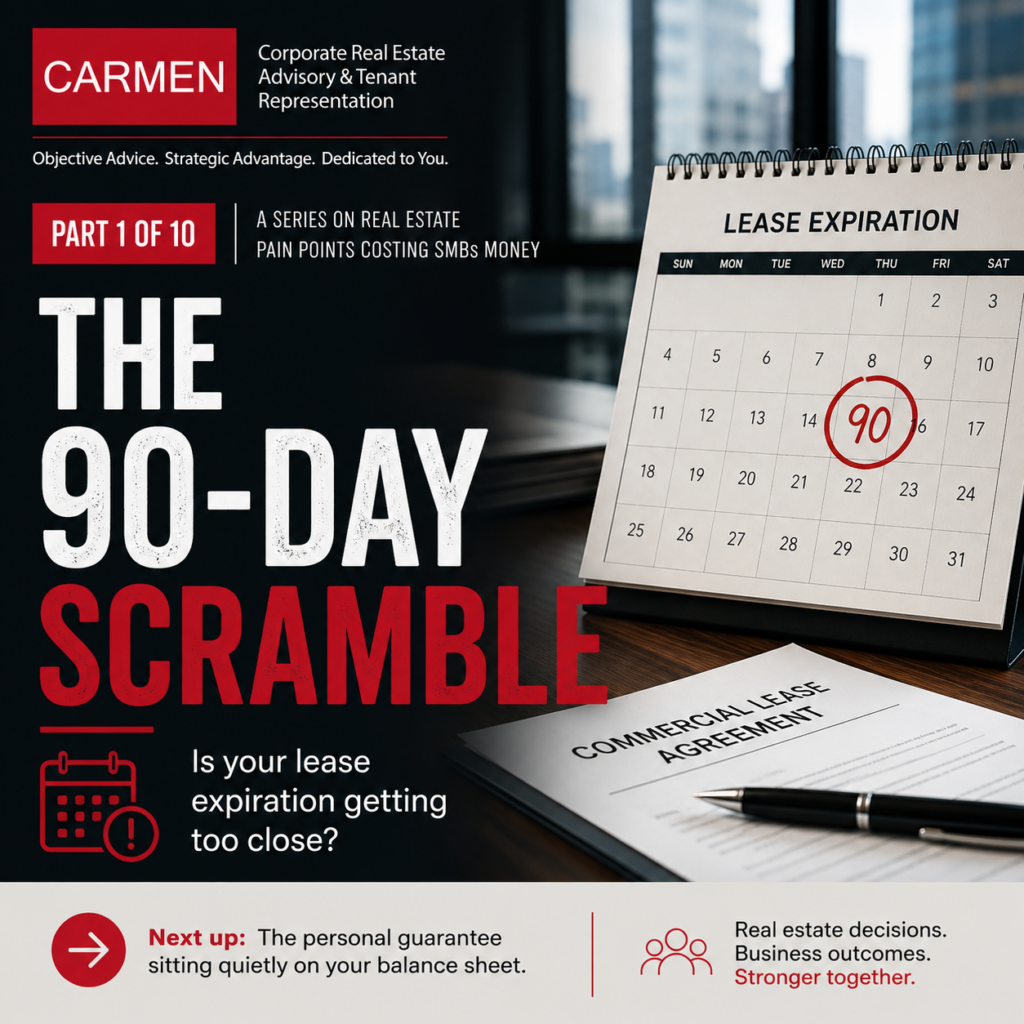
Part 1 of 10 in our series on the real estate pain points costing small and mid-size businesses money.
It happens more often than you think. A business owner looks at the calendar, realizes their office lease expires in three or four months, and suddenly they’re negotiating from a position of zero leverage. Not because they didn’t care — because nobody was watching the clock for them. What should have been a strategic business decision becomes a race against the clock.
Over my 30-years at CARMEN, I’ve seen this more than I can count. The problem usually isn’t neglect. Most business owners and their leadership teams have a few other things to think about….like focusing on running their core businesses, not keeping track of important lease dates, including the lease expiration.
The Problem
Commercial leases don’t send reminders. There’s no pop-up notification when you’re a year out from expiration, no nudge at the 18-month mark when you’d actually have time to explore alternatives. For most SMB owners, the lease sits in a drawer (or a shared drive folder nobody opens) that hasn’t been touched since the lease was signed….until the landlord’s renewal letter shows up — and by then, the clock is working against you, not for you.
Why Timing Matters
It’s not just inconvenience. It’s what you lose access to:
- Comparison leverage. With 90 days left, you don’t have time to tour alternative space, get competing proposals, or credibly threaten to walk. Landlords know this, and their “12th hour” renewal terms tend to reflect it.
- Negotiating power on everything else. Rent is the visible number, but TI allowances, expansion rights, and exit clauses are all easier to negotiate and more attainable when you’re not up against a deadline.
- The option to actually leave. If the space no longer fits — wrong size, wrong location, wrong cost structure — a compressed timeline can force you into a bad renewal costing you 10-20% more in rent and leaving money on the table simply because there isn’t time to execute a move.
A Simple Thing to Do Today
Pull out your lease and identify two important dates: the expiration date and the renewal notice deadline. The notice deadline is often buried in a clause requiring written notice 6–12 months in advance; missing it may trigger an automatic renewal or punitive holdover rent. Add both dates to your calendar with actual reminders—not mental notes. Set the first reminder for 24 months before the lease expires so you begin to think about it and have time to plan. If your lease expires within 12 months and you have not begun evaluating your options, you are already behind.
The Takeaway
Lease timing isn’t something you should be reacting to. It’s something that should be managed on a rolling basis — ideally by someone whose job it is to track it, benchmark the market, and make sure you’re negotiating from strength instead of scrambling from a deadline. If you decide to get help managing the important dates and clauses of your lease, find an independent corporate real estate advisor, not just a middleman broker.
This is Part 1 of a 10-part series on the real estate pain points SMB owners run into most often. Next up: the personal guarantee sitting quietly on your balance sheet.
« Previous Next »